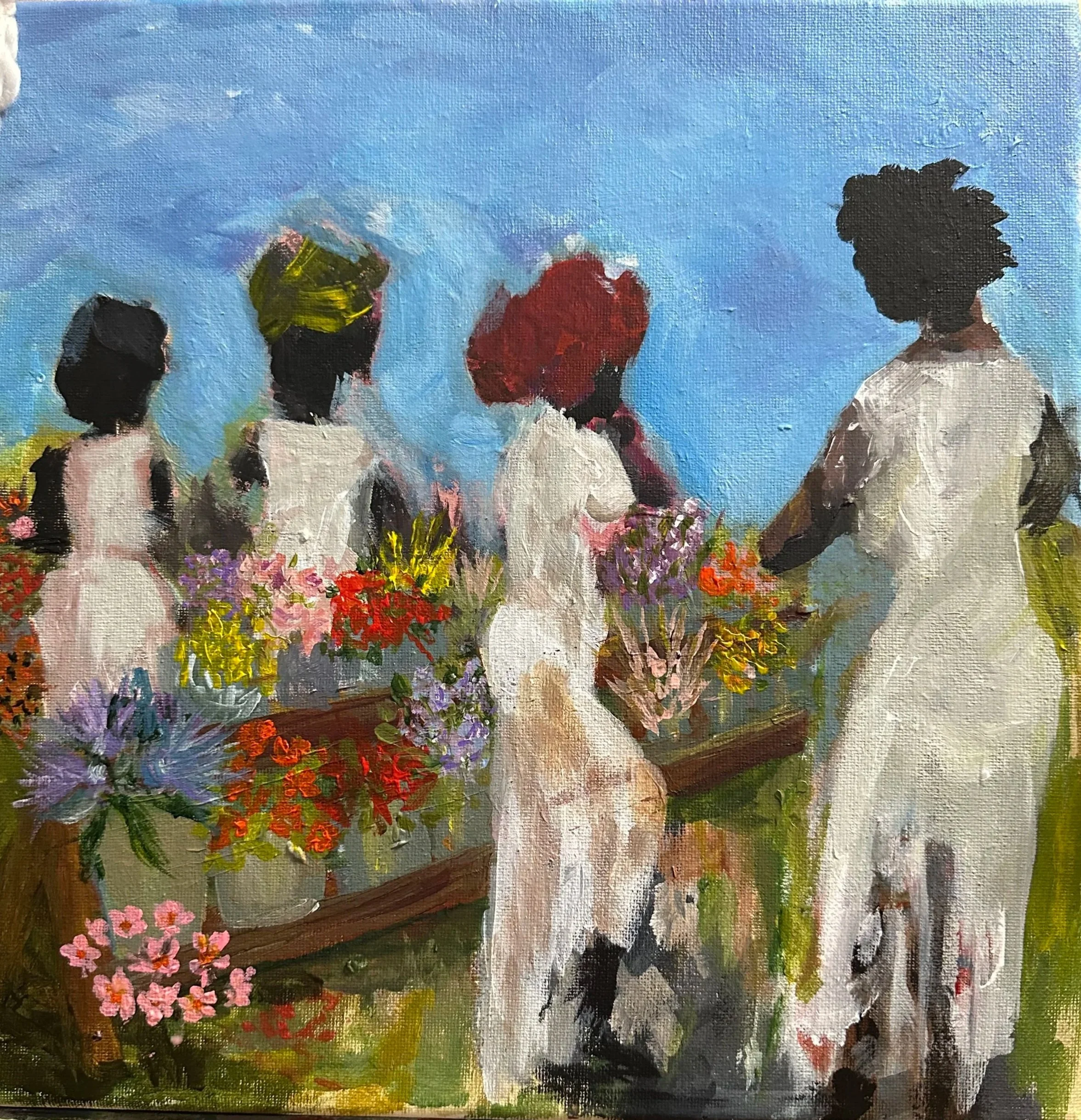
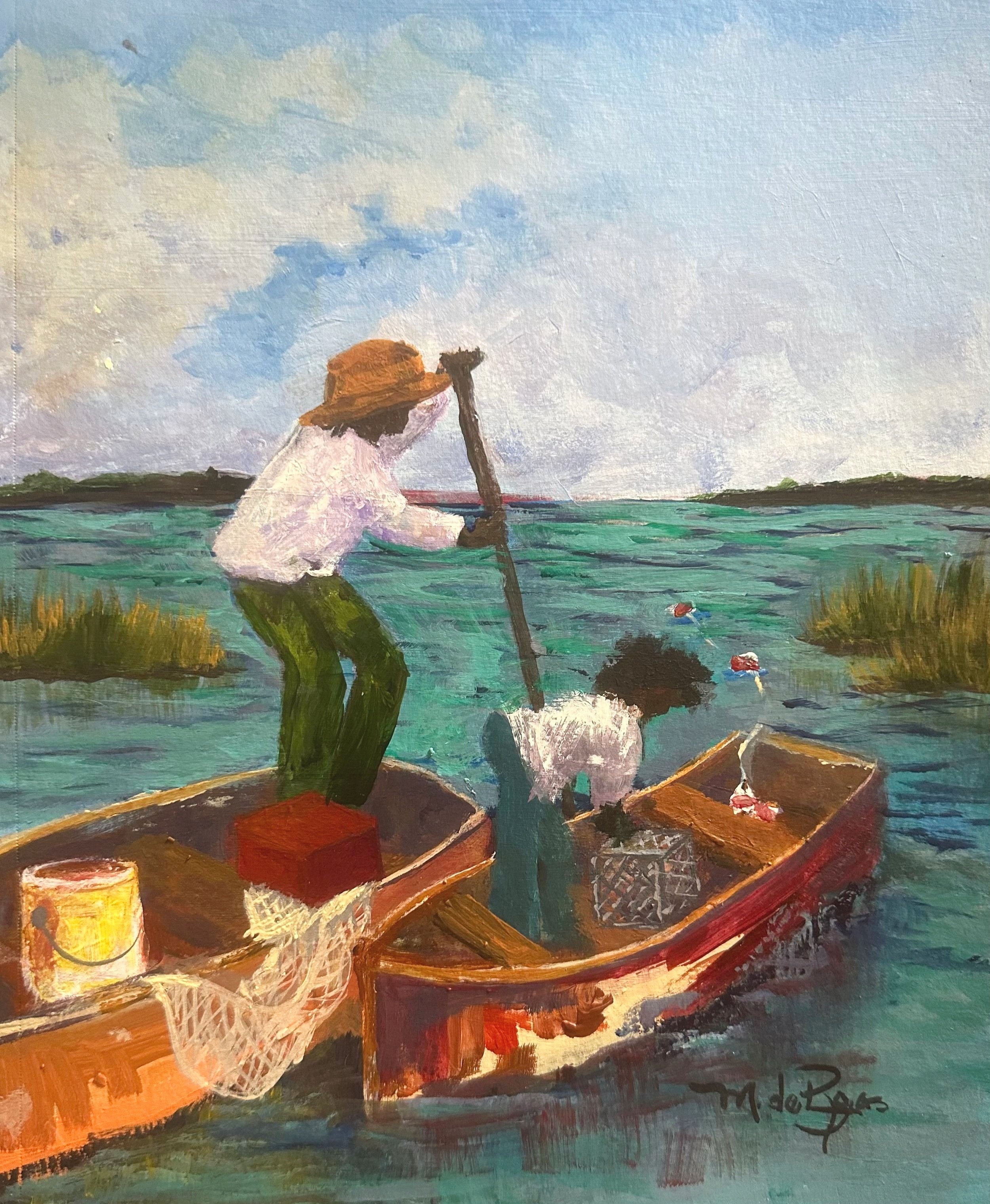
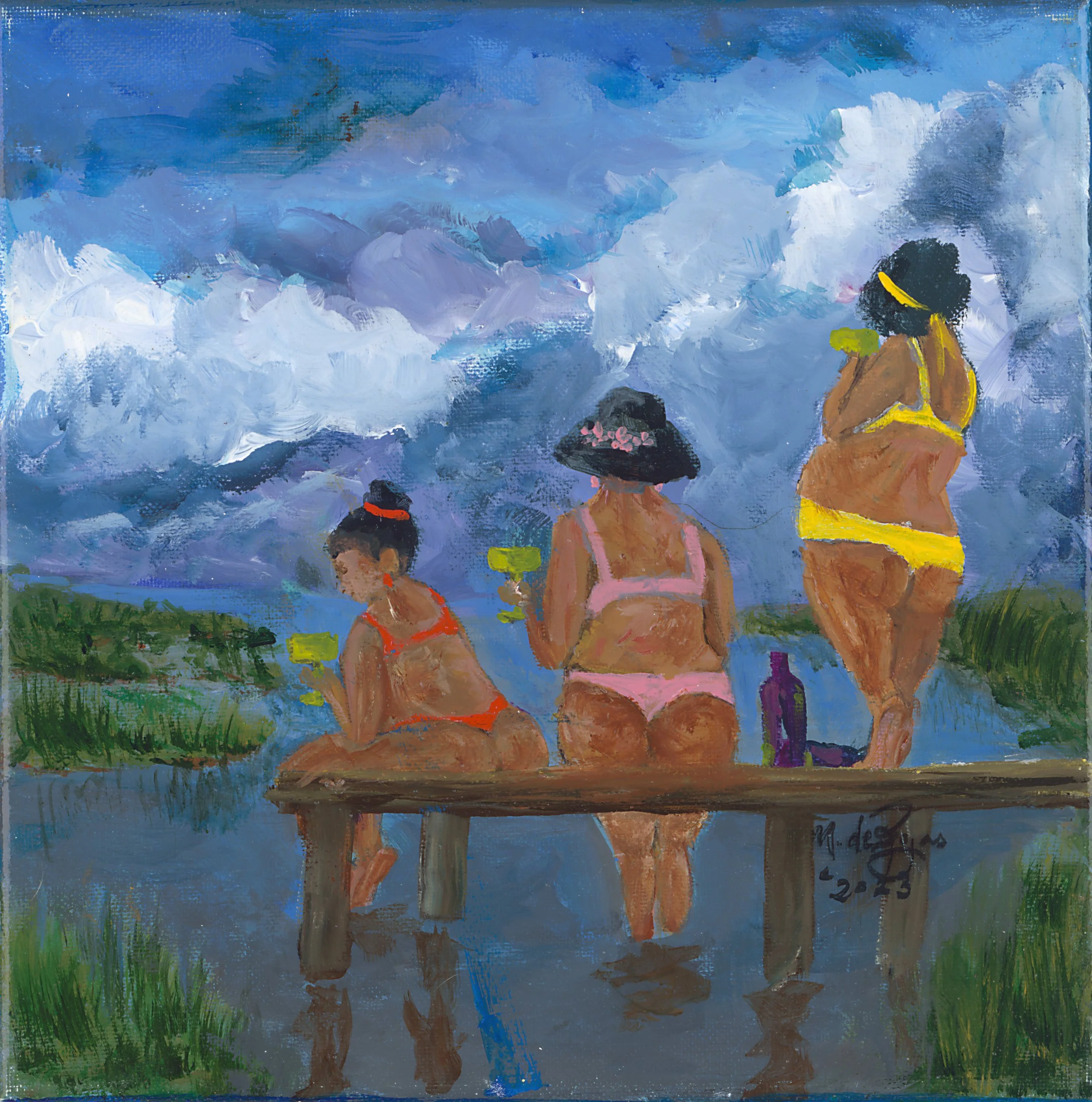
 Image 1 of 3
 Image 2 of 3
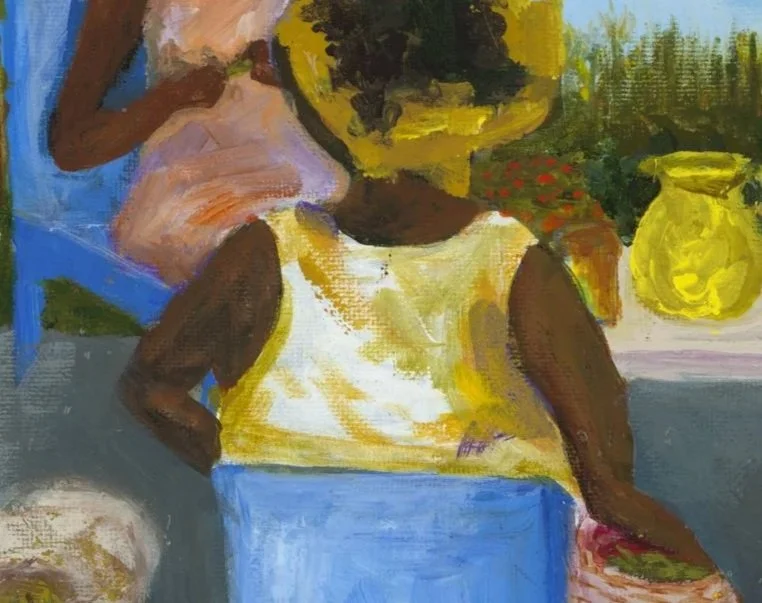 Image 3 of 3
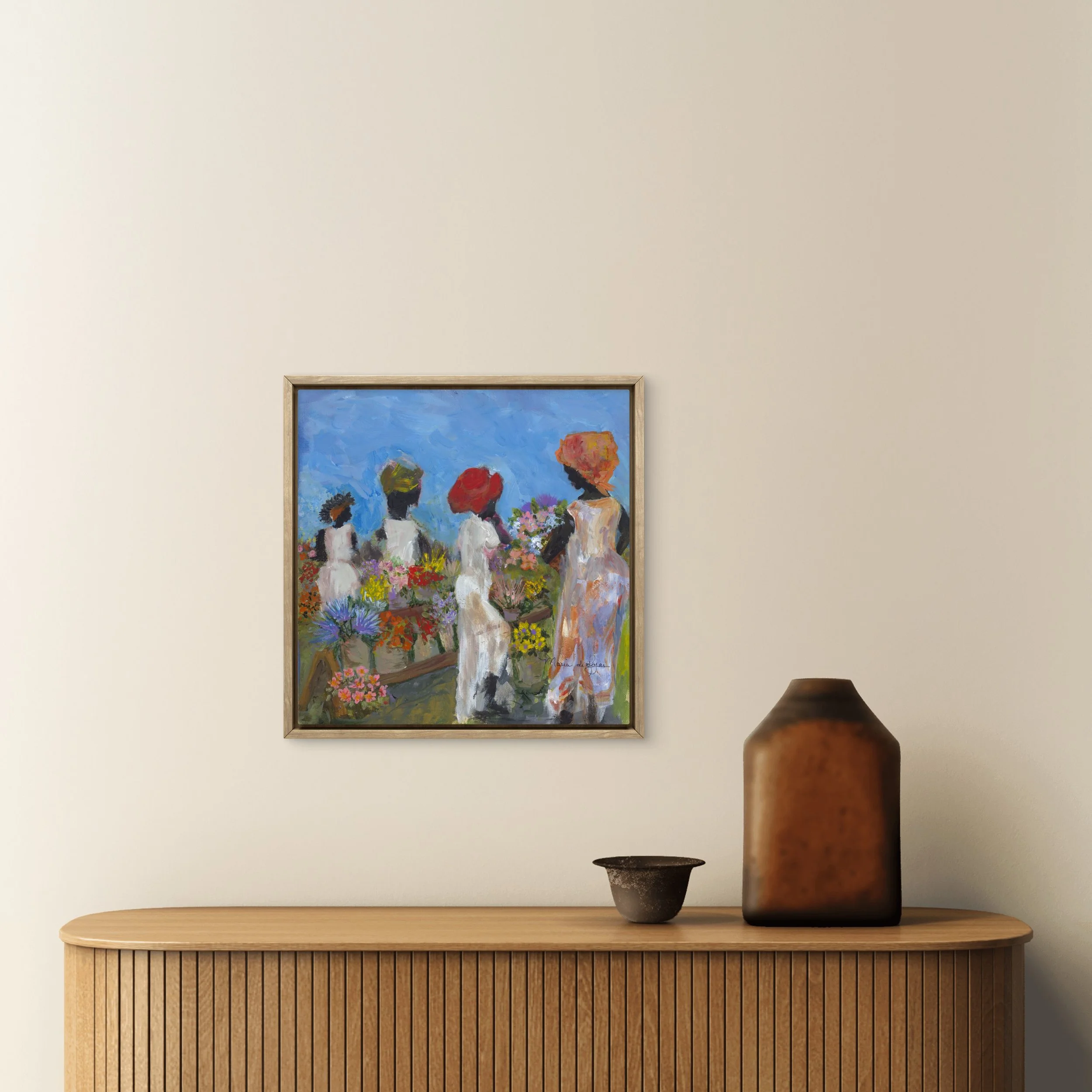
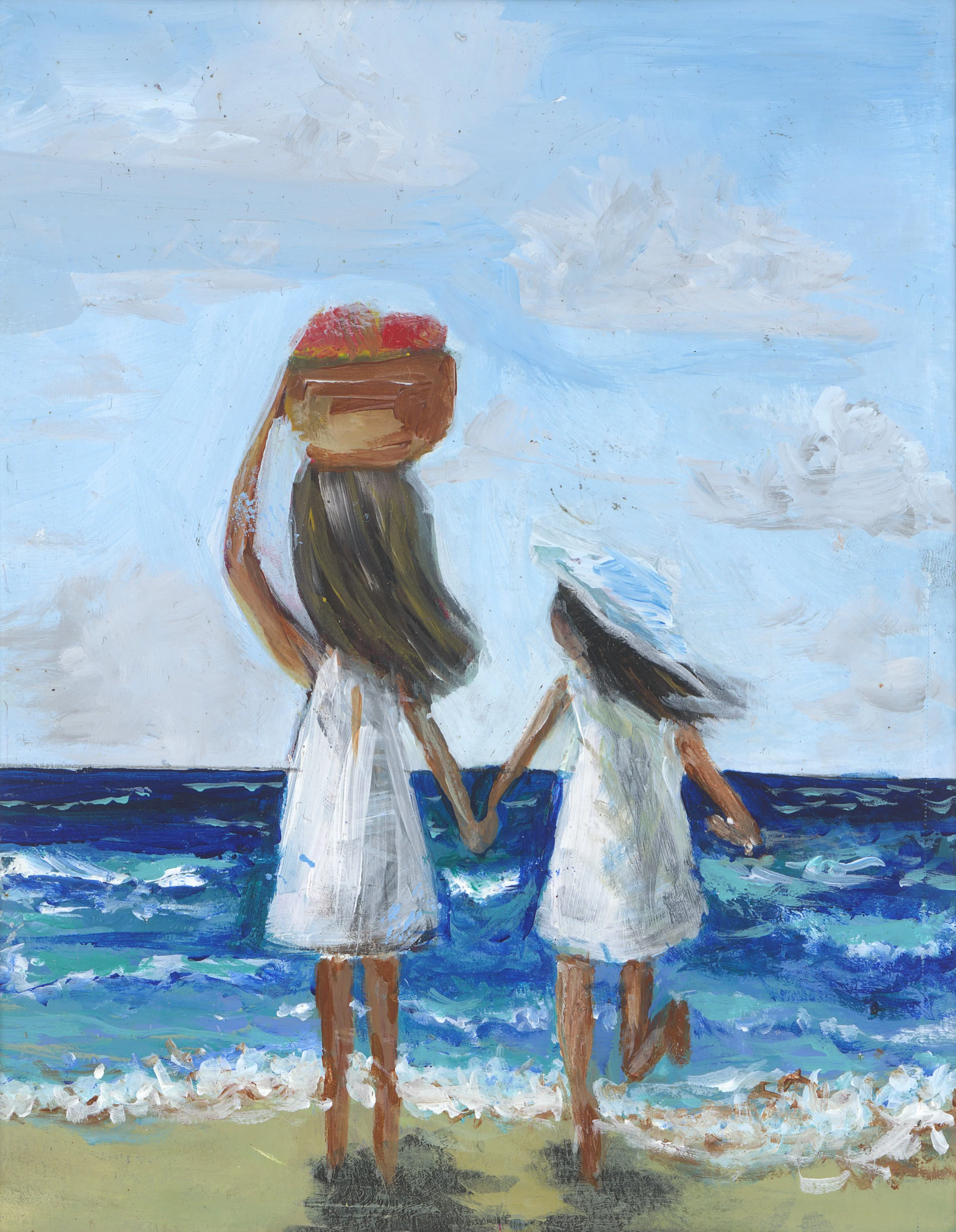
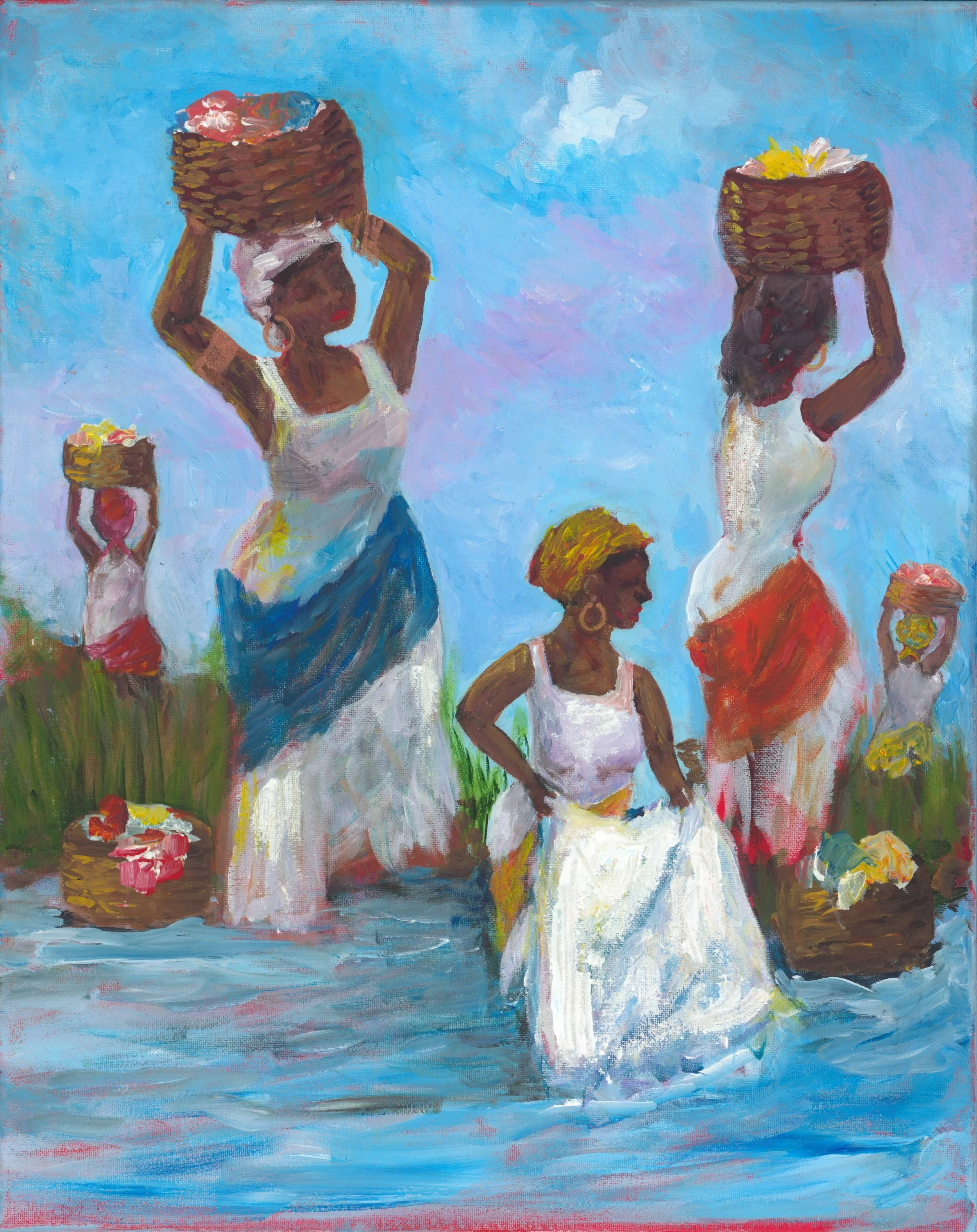
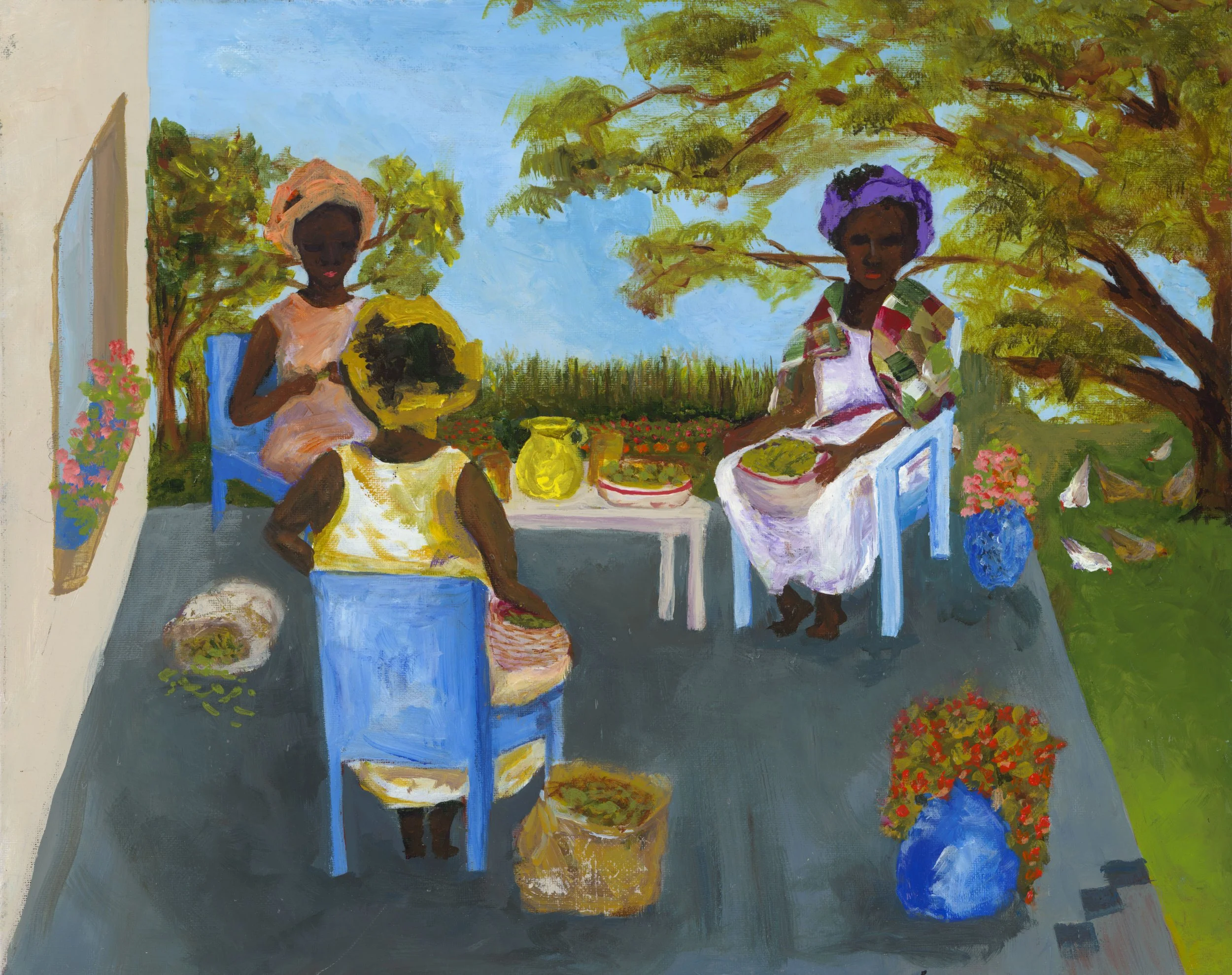
Immerse yourself in the vibrant world of Maria de Rojas with Giclee prints of this stunning Original painting, capturing the warmth and companionship of a timeless scene- women gathered to shell peas on the porch.
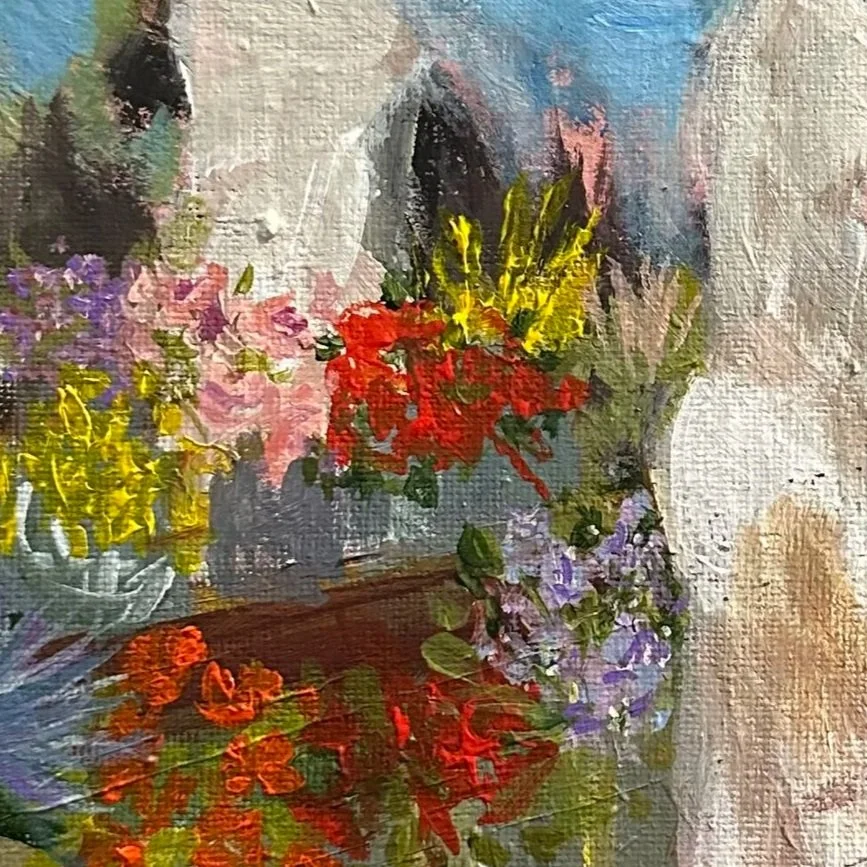
"Shelling Peas" #69— an original painting by Maria de Rojas — captures a quiet, intimate moment: a small group of women bent into the comfortable rhythm of shelling peas. The scene reads like a memory made visible, built from warm relationships, shared labor, and the soft domestic light of the Low Country. Color harmony and careful control of chroma are central to how the painting conveys closeness and calm.
Color harmony
A unified palette ties the figures and setting together. Maria favors analogous relationships—soft greens, warm yellows, and gentle coral-pinks—so the women and the surrounding environment feel like parts of the same world rather than separate elements. These neighboring hues create visual cohesion that subtly suggests emotional affinity among the women.
Repeated motifs of color across garments, baskets, and table surfaces create rhythmic echoes that lead the eye in a slow, conversational flow around the composition. Small accents—maybe a brighter rose on a lapel or a cool blue napkin—provide punctuation without breaking the overall harmony.
The background and foreground are balanced in temperature: a warm, sunlit midground supports cooler shadowed recesses, giving depth without visual rivalry. This balance keeps the focus on the interpersonal moment rather than dramatic contrasts.
Chroma and intimacy
Chroma—the intensity or purity of color—is used sparingly to foster intimacy. Maria often mutes the majority of tones, using low-to-moderate chroma for skin, fabrics, and surroundings. These softened colors feel worn-in and familiar, evoking the domestic, everyday quality of the scene.
Strategic higher-chroma accents enliven the composition and draw attention to key gestures: the sheen on a pea pod, a glint in a woman’s earring, a bright ribbon in someone’s hair. Because these vivid spots are few, they read as personal details—small points of warmth or individuality that deepen our sense of connection to the figures.
The subdued chroma also enhances tactile qualities: the matte surfaces of wooden bowls, the slightly dulled sheen of cotton dresses, the pale, satiny pearls of shelled peas. This tactility makes the act of shelling feel almost audible and tactile—hands moving, shells clicking—heightening the viewer’s sense of being present within the scene.
Brushwork, light, and color interaction
Maria’s confident, impressionistic brushstrokes allow colors to blend optically at close range and from a distance. Short, decisive strokes of slightly different hues sit side by side so that the eye completes the color relationships, reinforcing unity while preserving lively surface energy.
Warm highlights modulate the chroma locally: where light kisses a shoulder or a bowl, colors brighten and become slightly purer, suggesting focal warmth and the gentle attention of shared company. Shadows remain cool but not saturated—supporting depth without withdrawing from the overall warmth of the composition.
Emotional effect
The combined use of harmonious palette and moderated chroma produces a scene that feels intimate rather than theatrical. The colors invite the viewer in; they comfort rather than startle. The occasional vivid accent reads like laughter or a knowing glance—small bursts of personality that punctuate a larger feeling of togetherness.
Ultimately, Maria de Rojas’s color choices transform a simple domestic task into a portrait of community. The harmony and controlled chroma create a slow, lingering mood: the pleasure of ordinary moments, the warmth of shared labor, and the quiet beauty of life in the Low Country.
This painting invites you into a moment of simple joy and connection. It's a celebration of community and the beauty found in everyday life.
Immerse yourself in the vibrant world of Maria de Rojas with Giclee prints of this stunning Original painting, capturing the warmth and companionship of a timeless scene- women gathered to shell peas on the porch.
"Shelling Peas" #69— an original painting by Maria de Rojas — captures a quiet, intimate moment: a small group of women bent into the comfortable rhythm of shelling peas. The scene reads like a memory made visible, built from warm relationships, shared labor, and the soft domestic light of the Low Country. Color harmony and careful control of chroma are central to how the painting conveys closeness and calm.
Color harmony
A unified palette ties the figures and setting together. Maria favors analogous relationships—soft greens, warm yellows, and gentle coral-pinks—so the women and the surrounding environment feel like parts of the same world rather than separate elements. These neighboring hues create visual cohesion that subtly suggests emotional affinity among the women.
Repeated motifs of color across garments, baskets, and table surfaces create rhythmic echoes that lead the eye in a slow, conversational flow around the composition. Small accents—maybe a brighter rose on a lapel or a cool blue napkin—provide punctuation without breaking the overall harmony.
The background and foreground are balanced in temperature: a warm, sunlit midground supports cooler shadowed recesses, giving depth without visual rivalry. This balance keeps the focus on the interpersonal moment rather than dramatic contrasts.
Chroma and intimacy
Chroma—the intensity or purity of color—is used sparingly to foster intimacy. Maria often mutes the majority of tones, using low-to-moderate chroma for skin, fabrics, and surroundings. These softened colors feel worn-in and familiar, evoking the domestic, everyday quality of the scene.
Strategic higher-chroma accents enliven the composition and draw attention to key gestures: the sheen on a pea pod, a glint in a woman’s earring, a bright ribbon in someone’s hair. Because these vivid spots are few, they read as personal details—small points of warmth or individuality that deepen our sense of connection to the figures.
The subdued chroma also enhances tactile qualities: the matte surfaces of wooden bowls, the slightly dulled sheen of cotton dresses, the pale, satiny pearls of shelled peas. This tactility makes the act of shelling feel almost audible and tactile—hands moving, shells clicking—heightening the viewer’s sense of being present within the scene.
Brushwork, light, and color interaction
Maria’s confident, impressionistic brushstrokes allow colors to blend optically at close range and from a distance. Short, decisive strokes of slightly different hues sit side by side so that the eye completes the color relationships, reinforcing unity while preserving lively surface energy.
Warm highlights modulate the chroma locally: where light kisses a shoulder or a bowl, colors brighten and become slightly purer, suggesting focal warmth and the gentle attention of shared company. Shadows remain cool but not saturated—supporting depth without withdrawing from the overall warmth of the composition.
Emotional effect
The combined use of harmonious palette and moderated chroma produces a scene that feels intimate rather than theatrical. The colors invite the viewer in; they comfort rather than startle. The occasional vivid accent reads like laughter or a knowing glance—small bursts of personality that punctuate a larger feeling of togetherness.
Ultimately, Maria de Rojas’s color choices transform a simple domestic task into a portrait of community. The harmony and controlled chroma create a slow, lingering mood: the pleasure of ordinary moments, the warmth of shared labor, and the quiet beauty of life in the Low Country.
This painting invites you into a moment of simple joy and connection. It's a celebration of community and the beauty found in everyday life.